Robert Duvall's Enduring Legacy: From Tom Hagen to Hollywood Icon
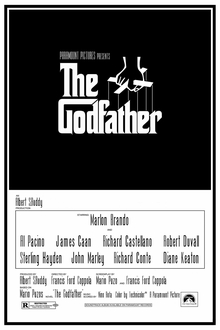
Robert Duvall, an actor of unparalleled range and quiet intensity, left an indelible mark on cinematic history. While his prolific career spanned nearly six decades, featuring commanding performances in films like Apocalypse Now, Tender Mercies, and The Apostle, it is perhaps his portrayal of the stoic, cerebral consigliere Tom Hagen in Francis Ford Coppola's The Godfather that cemented his status as a true Hollywood icon. The enduring appeal of the Robert Duvall Godfather character transcends time, offering a masterclass in subtlety and power.
The Unforgettable Consigliere: Tom Hagen's Impact in The Godfather
In the pantheon of cinematic villains and heroes, Tom Hagen stands apart. He is not a blood member of the Corleone family, yet he is undeniably its moral, and often practical, compass. Duvall masterfully brought to life this adopted son, the loyal, level-headed lawyer who serves as consigliere – an advisor of immense trust and discretion – to Don Vito Corleone. Hagen is the antithesis of hotheaded Sonny and the bumbling Fredo; he embodies quiet gravitas, an intellectual sharpness, and an unwavering loyalty that defines his Robert Duvall Godfather character.
Duvall reprised his role as Hagen in The Godfather Part II, further solidifying the character's critical importance to the Corleone saga. He was the voice of reason amidst chaos, the steady hand guiding the family through its most treacherous transitions. His performance earned him his first Academy Award nomination, a testament to his ability to convey immense depth and complexity with minimal fanfare. What truly elevates Duvall's performance is how he makes Hagen's outsider status his greatest strength; he operates with a detached professionalism that allows him to navigate the murky waters of organized crime without being consumed by its brutality. He is the law, albeit an unconventional one, within the lawless family.
Reflecting on the production of the original 1972 film, Duvall, along with co-stars James Caan, John Cazale, and Marlon Brando, sensed they were part of something extraordinary. "We all knew it – this was going to hit big. Those were good times," Duvall once recalled. He held particular reverence for Marlon Brando, stating, "He was our hero coming up, a king." This shared understanding of the film's monumental potential undoubtedly contributed to the electrifying performances that have captivated audiences for generations.
Beyond the Family Business: Duvall's Versatility and Iconic Roles
While the Robert Duvall Godfather character remains a cornerstone of his legacy, Duvall's career was far from defined by a single role. His versatility was truly his hallmark, allowing him to inhabit a breathtaking array of characters across genres. He didn't make his film debut until age 31, taking on the small but crucial role of the reclusive Arthur "Boo" Radley in 1962's To Kill a Mockingbird, a testament to his ability to make a lasting impression even with limited screen time.
Throughout the 1970s, Duvall emerged as a pivotal figure in the "New Hollywood" movement, collaborating with visionary directors and alongside a new breed of unconventional leading men, including Al Pacino, Robert De Niro, Dustin Hoffman, and Gene Hackman. His ability to seamlessly transition between leading and supporting roles, delivering performances of coiled fury and quiet gravitas, set him apart. Consider his legendary roles:
- Lt. Colonel Bill Kilgore in Apocalypse Now (1979): His portrayal of the surf-loving, Wagner-blasting Army colonel delivered one of cinema's most quotable lines ("I love the smell of napalm in the morning") and earned him another Oscar nomination.
- Mac Sledge in Tender Mercies (1983): A complete transformation into a washed-up country singer, a role that won him his much-deserved Academy Award for Best Actor.
- Frank Hackett in Network (1976): A ruthless TV executive, showcasing his capacity for intense, almost villainous portrayals.
- Sonny Dewey in The Apostle (1997): A passion project where Duvall delivered a raw, powerful performance as a Pentecostal preacher, earning him yet another Oscar nomination.
These roles, among many others like his turn in John Wayne's True Grit (1969) and Francis Ford Coppola's earlier film The Rain People (1969), illustrate Duvall's profound talent for fully inhabiting each character. He brought a unique blend of authenticity and intensity to every part, ensuring that even minor characters resonated long after the credits rolled. His legacy is one of transformative acting, a masterclass in disappearing into a role and making it wholly his own.
The Missing Consigliere: Why Tom Hagen Didn't Return for Part III
The absence of the Robert Duvall Godfather character, Tom Hagen, from The Godfather Part III (1990) remains a notable point of discussion among fans. After his crucial appearances in the first two acclaimed films, Duvall did not return for the trilogy's conclusion. Within the film's narrative, it is briefly mentioned that Hagen has died, leaving a significant void in Michael Corleone's inner circle and contributing to the film's often-criticized reception.
The Godfather Part III itself has had a mixed, if not tortured, reception. While contemporary reviews were initially approving, it often disappointed fans of the first two masterpieces. Director Francis Ford Coppola even attempted to reframe its legacy with a 2020 recut, retitled The Godfather Coda: The Death of Michael Corleone, hoping to achieve a more favorable reappraisal. However, for many, the absence of Duvall's calmly calculating and morally complex Tom Hagen was a palpable loss that undeniably affected the film's dynamic and its perceived connection to the preceding installments.
This situation offers an insightful look into the intricate balance of character, actor, and narrative in filmmaking. The departure of a character as integral as Tom Hagen demonstrates just how profoundly a single performance, and the actor behind it, can shape the identity and reception of an entire saga. It highlights the irreplaceable nature of Duvall's contribution to the Corleone narrative.
A Life Well-Lived: Duvall's Philosophy and Farewell
Robert Duvall passed away peacefully at the age of 95 in his home in Middleburg, Virginia, with his wife by his side. His family conveyed his wish for no formal service, instead encouraging fans to honor his memory by "watching a great film, telling a good story around a table with friends, or taking a drive in the countryside to appreciate the world's beauty." This sentiment perfectly encapsulates the man and his art – a deep appreciation for storytelling, connection, and the simple, profound beauty of life.
Duvall's career was a testament to his unwavering dedication to his craft. He never sought the flashy, superficial trappings of stardom, preferring instead to fully inhabit his characters, whether they were the quiet intensity of the Robert Duvall Godfather character or the fiery passion of a Pentecostal preacher. His performances were always grounded in truth, allowing audiences to connect with the human experience, in all its complexity and contradiction.
Tips for Appreciating Duvall's Craft:
- Watch with Intent: Pay attention to his non-verbal cues. Duvall often conveyed more with a look or a subtle shift in posture than with pages of dialogue.
- Character Study: Pick a film and analyze how he develops his character. How does Hagen evolve from the first Godfather to the second? What makes Kilgore so unforgettable despite relatively limited screen time?
- Explore His Range: Don't just stick to the well-known hits. Seek out his lesser-known films to truly grasp the breadth of his talent.
- Contextualize His Era: Understand how Duvall, alongside his contemporaries, reshaped American movie stardom during the New Hollywood era, moving away from conventional leading men.
Conclusion
Robert Duvall's legacy is one of quiet power, unmatched versatility, and an unwavering commitment to authentic storytelling. From his iconic portrayal of the Robert Duvall Godfather character, Tom Hagen, to his unforgettable turns as a crazed colonel, a redeemed country singer, or a fiery preacher, he consistently delivered performances that transcended the screen and burrowed into the collective consciousness. His passing marks the end of an era, but his vast body of work ensures that his influence will continue to inspire actors and enthrall audiences for generations to come. Robert Duvall didn't just play characters; he became them, leaving behind a cinematic tapestry rich with humanity and unparalleled artistry.