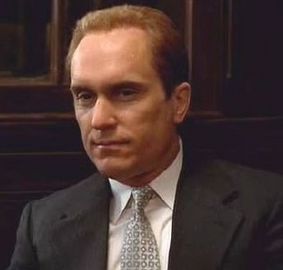
The cinematic world recently mourned the passing of Robert Duvall, an indelible actor whose career spanned nearly six decades, leaving behind a monumental legacy of unforgettable performances. Among his vast repertoire, few roles resonated as deeply and cemented his iconic status quite like his portrayal of Tom Hagen, the stoic, loyal consigliere in Francis Ford Coppola's seminal *Godfather* saga. Duvall's depiction of this seemingly unassuming but profoundly influential character became a touchstone for the "Robert Duvall Godfather Character" discussion, a masterclass in quiet power and unwavering devotion.
Yet, for all the praise heaped upon Duvall's work in the first two films, an absence hangs over the trilogy's conclusion: Tom Hagen is conspicuously missing from *The Godfather Part III*. A brief, almost dismissive mention of his death in the film leaves fans wondering, why did this integral figure, this adopted son of the Corleone family, not return for the final chapter? What truly transpired behind the scenes that led to the omission of one of cinema's most compelling supporting characters?
The Stoic Strength of Robert Duvall's Tom Hagen: An Adopted Son's Loyalty
From his first appearance in *The Godfather* (1972), Robert Duvall's Tom Hagen immediately distinguished himself. He wasn't a blood brother like Sonny or Fredo, nor the heir apparent like Michael. Instead, Hagen was the Corleone family's consigliere – its lawyer, advisor, and voice of reason. Duvall imbued Hagen with a profound sense of quiet gravitas, a character who navigated the brutal world of the Mafia with intellect and measured calm rather than overt violence. He was the bridge between Vito Corleone's old-world wisdom and Michael's cold, calculating modernity.
Duvall's performance was a testament to his ability to "fully inhabit each character," delivering a portrayal that was both subtle and commanding. He was the one who could relay uncomfortable truths to Vito, negotiate with rival families, and offer counsel to a struggling Michael. His calm demeanor often masked a "coiled fury" that surfaced only when the family's interests were truly threatened. This nuanced portrayal earned him his first Oscar nomination and cemented the Tom Hagen's Role: Robert Duvall's Adopted Corleone Family Consigliere as an indispensable part of the Corleone empire.
The cast and crew knew they were making something special during the production of the first film. Duvall himself recalled, "We all knew it — this was going to hit big. Those were good times." He praised Marlon Brando's performance as Vito Corleone, calling him "our hero coming up, a king." This sense of shared purpose and collaborative brilliance extended into *The Godfather Part II* (1974), where Hagen's role was even further expanded, showcasing his unwavering loyalty and critical importance to Michael's reign.
The Omission from *The Godfather Part III*: A Lingering Question
Nearly two decades after *The Godfather Part II*, Francis Ford Coppola attempted to conclude the Corleone saga with *The Godfather Part III* (1990). The film itself has endured a tumultuous reception, initially met with mixed reviews and often regarded as a significant disappointment by fans of the first two masterpieces. While its reputation has seen a modest re-appraisal in recent years, particularly with Coppola's 2020 re-edit, *The Godfather Coda: The Death of Michael Corleone*, one major criticism has consistently persisted: the absence of Robert Duvall's Tom Hagen.
In the narrative of *The Godfather Part III*, it is briefly and somewhat unceremoniously mentioned that Tom Hagen has died prior to the film's events. This sudden departure of a character so central to the Corleone family's operations and emotional core left a gaping hole. Hagen represented Michael's moral compass, his legal shield, and his most trusted confidant—the one person who often saw Michael's soul beneath the ruthless exterior. Without him, Michael's isolation and descent into despair in the third film felt even more profound and, for many, less anchored.
For audiences deeply invested in the Corleone family's intricate dynamics, the missing "Robert Duvall Godfather Character" was not just a plot point but a narrative void. It signaled a break from the established familial structure and underscored Michael's increasingly solitary struggle to legitimize his empire and atone for his past sins.
Unpacking the Real Reasons: Why Duvall Stepped Away
The official in-film explanation for Tom Hagen's absence—his death—belied a much more complex reality rooted in the challenging world of Hollywood contract negotiations. While the reference context highlights Duvall's decision not to return, it doesn't delve into the underlying causes. However, it is widely reported and accepted within film history circles that Robert Duvall's departure from *The Godfather Part III* stemmed from a salary dispute.
By the time plans for *Part III* were underway, Duvall was an acclaimed actor, having garnered significant recognition for roles in films like *Apocalypse Now* and winning an Academy Award for *Tender Mercies*. He had also played a pivotal, expanded role in *The Godfather Part II*. Duvall reportedly sought compensation commensurate with his stature and the importance of his character, specifically aiming for a salary comparable to that of Al Pacino, who played Michael Corleone.
However, Paramount Pictures and Francis Ford Coppola were reportedly unable or unwilling to meet Duvall's financial demands. Filmmaking, even for a legacy project like *The Godfather*, is a business, and budgetary constraints and star power negotiations are a constant reality. Duvall, a professional who understood his worth, opted not to return when his terms could not be met. This was not a reflection of animosity but a business decision, albeit one with significant creative repercussions for the film.
The absence of the "Robert Duvall Godfather Character" necessitated significant rewrites, altering the core dynamic of Michael's inner circle. His daughter, Mary Corleone (Sofia Coppola), and a new consigliere, B.J. Harrison (George Hamilton), attempted to fill the void, but the irreplaceable gravitas and history that Duvall brought to Tom Hagen were profoundly missed. This behind-the-scenes financial hurdle ultimately impacted the film's narrative coherence and fan reception, contributing to its mixed legacy.
Robert Duvall: A Legacy Beyond the Corleones
While Tom Hagen remains one of his most celebrated roles, Robert Duvall's career was a masterclass in versatility and sustained excellence. Born in 1931, Duvall didn't make his film debut until age 31, taking on the crucial role of Arthur "Boo" Radley in *To Kill a Mockingbird* (1962), a performance that showcased his ability to convey deep emotion with minimal dialogue. He steadily built his reputation throughout the 1960s, with memorable turns in films like *True Grit* (1969) and Francis Ford Coppola's *The Rain People* (1969), marking the beginning of a fruitful collaboration.
The 1970s saw Duvall emerge as a central figure of the "New Hollywood" movement, alongside contemporaries like Al Pacino and Robert De Niro. He effortlessly alternated between leading and supporting roles, demonstrating a range that few actors could match. From the surf-loving Army Colonel Bill Kilgore in *Apocalypse Now* (1979) – delivering the iconic line, "I love the smell of napalm in the morning" – to the ruthless TV executive Frank Hackett in *Network* (1976), Duvall fully immersed himself in every character.
Later in his career, he continued to deliver powerful performances, notably as a passionate Pentecostal preacher in *The Apostle* (1997), a film he also wrote and directed, earning him another Oscar nomination. Robert Duvall's career was a testament to his dedication to the craft, his ability to convey both "coiled fury and quiet gravitas," and his profound impact on American cinema. His legacy is one of a true artist, capable of transforming any role, big or small, into an unforgettable screen presence.
Robert Duvall's passing at 95 closed a chapter in Hollywood history, but his work endures. As his family encouraged fans, his memory can be honored by "watching a great film, telling a good story around a table with friends, or taking a drive in the countryside to appreciate the world’s beauty." Each option feels fitting for an actor who brought such depth and humanity to the screen.
Conclusion
The absence of Robert Duvall's Tom Hagen from *The Godfather Part III* remains a point of contention and curiosity for fans, a bittersweet footnote in the saga of one of cinema's most revered characters. While the reasons behind his non-return were rooted in the often-harsh realities of Hollywood deal-making, they inadvertently amplified the enduring impact of his performance in the first two films. The "Robert Duvall Godfather Character" is not just a role; it's a masterclass in understated power, loyalty, and intellectual prowess within a world of brutal force.
Duvall's portrayal of Hagen carved an indelible niche in film history, a testament to his extraordinary talent that transcended the Corleone narrative. His passing reminds us to revisit and celebrate the vast tapestry of his work, ensuring that the legacy of Robert Duvall—the versatile, commanding actor—and his iconic Tom Hagen, will continue to inspire and captivate audiences for generations to come.