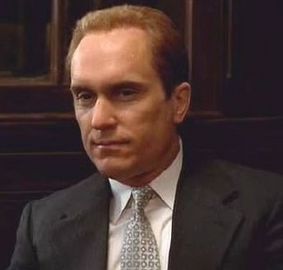
Tom Hagen's Role: Robert Duvall's Adopted Corleone Family Consigliere
In the annals of cinematic history, few characters resonate with the quiet power and unwavering loyalty of Tom Hagen. Portrayed with masterful subtlety by the legendary Robert Duvall, the character of Hagen stands as an indelible pillar in Francis Ford Coppola's iconic The Godfather saga. While not bound by blood, Hagen was the quintessential adopted son, the trusted consigliere whose counsel guided the Corleone family through their most treacherous trials. Duvall's portrayal of this pivotal figure cemented his status as one of Hollywood's most versatile and commanding actors, leaving an enduring legacy that extends far beyond the crime genre. This article delves into the unique significance of Robert Duvall's Godfather character, Tom Hagen, exploring his critical role, Duvall's nuanced performance, and the profound impact of his absence in the final chapter of the trilogy.
The Indispensable Consigliere: Tom Hagen's Place in the Corleone Empire
Tom Hagen's position within the Corleone family was singular and profound. He was the legal mind, the strategic voice of reason, and the calm in the storm for Don Vito and later Michael Corleone. Adopted into the family after a troubled youth, Hagen's loyalty was absolute, yet his approach was always detached and logical, a stark contrast to the passionate, often impulsive nature of the biological Corleone sons like Sonny or Fredo. His counsel was rooted in practicality and foresight, meticulously navigating the complex web of underworld politics and legitimate business dealings.
As the family's consigliere, Hagen wasn't merely a lawyer; he was a trusted advisor, a diplomat, and sometimes, the bearer of uncomfortable truths. He possessed an innate understanding of power dynamics, demonstrating an uncanny ability to assess threats and opportunities with a poker face that belied a sharp intellect. His non-Italian heritage, while initially perceived by some outside the family as a potential weakness, paradoxically made him an invaluable asset. He could operate with a certain level of anonymity and perceived neutrality in the broader American legal and political spheres, often acting as the bridge between the Corleone's shadowy empire and the legitimate world they aspired to conquer. This unique perspective allowed him to see angles and implications that others, too steeped in tradition or emotion, might miss. For instance, it was Hagen who often articulated the long-term consequences of violent actions, advocating for strategic diplomacy over rash retribution, a quality Michael Corleone eventually came to value profoundly.
Robert Duvall's Masterful Portrayal: Crafting Quiet Gravitas
The brilliance of Robert Duvall's Tom Hagen lies in his extraordinary ability to convey immense power and intelligence through understated performance. His Hagen was a masterclass in "quiet gravitas," a man whose presence commanded respect not through boisterous threats but through an aura of unwavering competence and calm authority. Duvall infused the character with a stoic demeanor, a perpetually observant gaze, and a measured delivery that hinted at deep thought and unwavering resolve. This nuanced approach earned him his first Academy Award nomination for Best Supporting Actor for The Godfather in 1972, a testament to his profound impact on the film.
Duvall, alongside an ensemble cast that included legends like Marlon Brando, James Caan, and Al Pacino, understood the monumental potential of The Godfather during its production. He famously recalled, "We all knew it — this was going to hit big. Those were good times." His admiration for Brando, whom he called "our hero coming up, a king," speaks to the collaborative spirit and high caliber of talent that defined the set. Duvall's portrayal was not merely about delivering lines; it was about embodying the very essence of a man caught between two worlds, his loyalty absolute, his methods precise. He demonstrated how true strength can often be found not in aggression, but in strategic restraint and intellectual prowess, shaping how audiences perceived the powerful, yet often silent, orchestrators behind the scenes. This performance cemented Robert Duvall's Godfather character as one of the most memorable in cinematic history.
The Shadow of Absence: Tom Hagen's Fate and The Godfather Part III
One of the most discussed aspects of The Godfather trilogy is the conspicuous absence of Tom Hagen in The Godfather Part III (1990). In the film, it is briefly mentioned that Hagen has died, leaving a void in Michael Corleone's inner circle that is never truly filled. This narrative choice left many fans and critics questioning the direction of the final chapter, especially given the character's integral role in the first two films. While the in-universe explanation was straightforward, the real-world reasons for Duvall's non-return are well-documented and widely attributed to a salary dispute. It's understood that Duvall felt his compensation for reprising such a critical role should have been on par with other leading actors in the film, a disagreement that ultimately led to his departure from the project. This decision, in retrospect, has often been cited as one of Duvall's "regrets," not necessarily for the dispute itself, but for the inability to complete the arc of a character he had so masterfully brought to life.
Hagen's absence undoubtedly impacted The Godfather Part III, which, despite Francis Ford Coppola's later efforts to reappraise it with new cuts like The Godfather Coda, initially received a mixed to critical reception. Without Hagen's calm, pragmatic counsel, Michael Corleone appears more isolated, more desperate, and increasingly burdened by the consequences of his past actions. The trusted consigliere had always served as Michael's ethical compass, or at least his strategic foil, offering a perspective that often tempered Michael's more ruthless impulses. His strategic acumen was also sorely missed, as Michael struggled to legitimize the Corleone empire. This void underscored Hagen's importance and inadvertently highlighted the depth of Robert Duvall's contribution to the earlier films. To delve deeper into the reasons behind this significant omission, read Robert Duvall's Tom Hagen: Why the Consigliere Missed Godfather III.
Beyond the Corleone Family: Robert Duvall's Enduring Legacy
While Robert Duvall's Godfather character remains one of his most iconic, his prolific career spanning nearly six decades showcases an unparalleled range and commitment to his craft. Duvall was a true chameleon, effortlessly alternating between leading and supporting roles and fully inhabiting each character with an intensity that made them unforgettable. From his early, haunting portrayal of Boo Radley in To Kill a Mockingbird (1962) to the fiery Lieutenant Colonel Bill Kilgore in Apocalypse Now (1979) – famous for the line, "I love the smell of napalm in the morning" – Duvall consistently delivered performances of coiled fury and quiet gravitas.
His versatility shone through in diverse roles such as the washed-up country singer Mac Sledge in Tender Mercies (1983), for which he won an Academy Award for Best Actor, or the passionate Pentecostal preacher Euliss 'Sonny' Dewey in The Apostle (1997), a deeply personal project he also wrote and directed. He was a key figure in the "New Hollywood" movement of the 1970s, collaborating with visionary directors and alongside contemporaries like Al Pacino and Robert De Niro, redefining American movie stardom. Duvall's commitment to authenticity, his meticulous research, and his ability to disappear into a role made him a beloved and respected figure. His passing at 95 was met with a collective appreciation for his immense contributions, with his family encouraging fans to honor him by "watching a great film, telling a good story around a table with friends, or taking a drive in the countryside to appreciate the world’s beauty." His legacy is one of profound impact, not just for his iconic roles, but for his enduring dedication to the art of storytelling. Learn more about his illustrious career in Robert Duvall's Enduring Legacy: From Tom Hagen to Hollywood Icon.
In conclusion, Robert Duvall's portrayal of Tom Hagen is a cinematic masterclass, embodying the quiet strength and strategic intellect that was indispensable to the Corleone family. His character, the adopted consigliere, provided a crucial counterpoint to the family's more volatile members, guiding them with a calm hand and a sharp mind. Duvall's ability to imbue Hagen with such gravitas and authenticity, making him a central figure without relying on overt theatrics, remains a testament to his unparalleled talent. Even in his absence from The Godfather Part III, Hagen's influence on the narrative, and the void he left, underscored the profound impact of Robert Duvall's Godfather character. His work as Hagen is just one facet of a career that enriched American cinema with an array of unforgettable performances, solidifying Robert Duvall's status as a true legend of the screen.